
How Our Communities Support Us
What communities do you want to build or enhance?

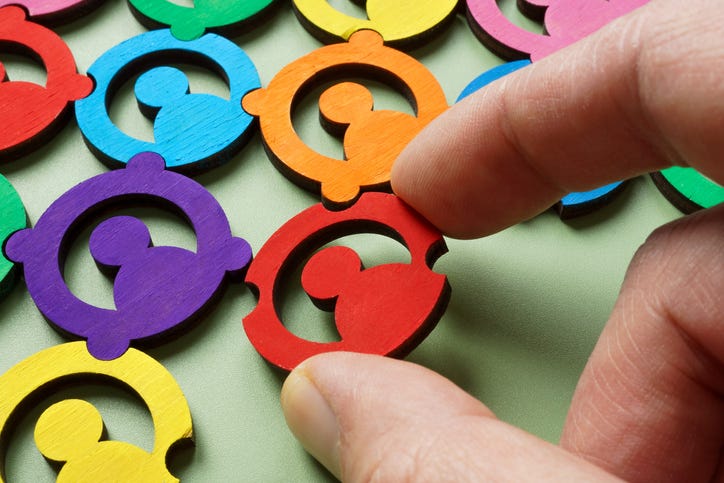
As I evolve into this next stage of work and life, I am more aware of old and new communities in which I can give and receive my talent, caring, resources and more. Some of my communities are drifting away and some are new.
If we just charge across a line of transition, we might miss the importance that community has had or will have in the future.
A community is defined as “a unified body of individuals.” Each community has a context. For example, the context might:
Geographic community - The neighborhood, town, or area where you live. For example, “I’m organizing a park cleanup in my community.”
Identity-based community - A group sharing a common characteristic like ethnicity, religion, sexual orientation, or disability. For instance, “As a member of the LGBTQ+ community...” or “In my faith community...”
Community of interest or practice - People connected by shared hobbies, professions, or passions. Like “the gaming community,” “my yoga community,” or “the academic community.”
Online community - Groups formed through social media, forums, or apps around shared interests or goals.
Chosen family or social circle - Sometimes people use “community” to describe their close network of friends and supporters, especially if they feel disconnected from family or geographic neighbors.
The word often carries a sense of belonging, mutual support, and shared values or experiences. When someone talks about “their” community specifically, they’re usually indicating a group where they feel they belong and have some investment or stake in its wellbeing.
The meaning really depends on who’s speaking and what matters most to them in terms of connection and identity.
Communities in Transition
When we are in a work or life transition, the communities we rely on can change. some become more or less important. New communities emerge. For example:
When I moved from the house I raised my son, I no longer needed the neighborhood community in the same way. In each neighborhood since, I have happily found people to create a sense of belonging.
Over the last 25 years, I have built a community of complementary practitioners. Now, as I reshape my practice, I am supportive and ready to help, but less in the center of things.
As I balance my time with volunteer work, I am engaging in the Rotary Club community, as community that is well-established. I am finding my place in the work I want to do, but I do not have a true sense of belonging yet.
We can mourn a community lost, or cherry-pick the most important people to form a tighter community going forward. When I left Sibson & Company, a consulting firm where I spent twelve years of my work life, I thought I would be lonely for the collegial community of practice. What I found is that I carried the most important people forward and can call on anyone in the wider community today.
All communities require attention and give and take.
Communities That Stay Over Time
Most of us have a few communities that nurture us and that remain over long stretches of time. For me those are:
Family—I grew up in a military family, so my earliest experience was a tight, small unit of family. We counted on each other in different ways as we moved and integrated into new locations. Now my family is still small and tight. With a second marriage, I definitely “chose” his kids and grandchildren as my loved family.
Friends—I have some long-time friends that I could also categorize as family. I now have several circles of friends that have something in common (e.g., social, projects, etc.)
Colleagues and Clients—Some of my colleagues and clients I have stayed in touch with for decades. Over time, they have also become my friends.
Whether we go through a slow or abrupt transition, I believe it is our close communities that value the most.
Intergenerational Communities
Do you live in a intergenerational neighborhood? My last neighborhood was not. My new neighborhood is increasingly intergenerational.
The houses in my neighborhood are far enough apart that one cannot talk to a neighbor as they get in the car. There are no sidewalks. You must have a dog or baby that you take on walks to meet people, but then the only people you meet have either a dog or a baby.
I am working to bring neighbors into a community feeling.
I expect to live in the neighborhood for a long time, so I have started having a “coffee/tea” for ladies, young children welcome. I want to know and be known.
Next summer, I hope to invite children to work with me in our vegetable garden, maybe carving out a space for each child. I got the idea from my step-son who has started a business to build housing and community spaces for intergenerational communities. Check Rekindle out here.
I find great enjoyment in being around people of all ages.
What are the communities you value the most? Are you building any new communities?
I would be so happy to hear from you! Reply to my email or leave a comment on Substack. If you do, “Love” the post above the first picture!
Quotes To Think About
“The greatness of a community is most accurately measured by the compassionate actions of its members.” Coretta Scott King
“A healthy social life is found only when, in the mirror of each soul, the whole community finds its reflection, and when, in the whole community, the virtue of each one is living.” Rudolf Steiner
“In every community, there is work to be done. In every nation, there are wounds to heal. In every heart, there is the power to do it.” Marianne Williamson
“Communication leads to community, that is, to understanding, intimacy and mutual valuing.” Rollo May